Disney's Wildest Ideas: Exploring Oddball 90s Cartoon Concepts
The 1990s were a fascinating era for Disney. While the studio was busy dominating the box office with its "Disney Renaissance" animated features, it was simultaneously taking bold, often unconventional, risks in television programming. From the iconic "Disney Afternoon" block to unique Disney Channel offerings,
90s Disney shows ventured into territories that, looking back, seem wonderfully peculiar for a company known for its fairytale magic. This period saw Disney unleash a slew of concepts that were "out of pocket," yet became cherished parts of many a childhood.
The Era of Experimentation: Why the 90s Stood Out for Disney
The turn of the decade brought with it a shift in television consumption and a growing appetite for diverse content. Disney, ever the innovator, didn't shy away from this challenge. Instead of simply replicating its classic formula, the studio embraced creative freedom, allowing its animators and storytellers to explore a vast spectrum of genres and themes. This willingness to experiment with established intellectual properties and even create entirely new ones led to a golden age of unique storytelling. Many of these programs resonated deeply with audiences because they weren't afraid to be different, often blending humor, action, and even darker undertones in ways previously unseen from the House of Mouse. This era of creative freedom helped shape the future of animated television and solidified the nostalgic appeal of these unforgettable 90s Disney shows. For a broader look at the distinct offerings beyond the celebrated afternoon block, consider delving into
Beyond The Disney Afternoon: Iconic & Unique 90s Disney Shows.
From Ice Rinks to Outer Space: Cartoon Concepts That Broke the Mold
The sheer variety of animated concepts that emerged from Disney in the 90s is staggering. Many of these shows took familiar characters or premises and twisted them into something entirely unexpected.
The Mighty Ducks: An Animated Hockey League with a Sci-Fi Twist
Perhaps one of the most delightfully bizarre concepts to emerge from the 90s was
The Mighty Ducks animated series. Inspired by the popular live-action films about a youth hockey team, the cartoon took an astonishing left turn. Instead of following the underdog kids, this series introduced an entirely new premise: a team of anthropomorphic, hockey-playing ducks from another dimension who crash-land on Earth and become superheroes fighting an evil alien overlord, Lord Dragaunus (famously voiced by Tim Curry).
The disconnect between its live-action namesake and its animated reality was profound. The cartoon blended sci-fi, superhero action, and sports in a way that truly made it one of a kind. While it only ran for a single season (1996-1997), it garnered a Daytime Emmy for Outstanding Sound Editing and remains a cult favorite. Its audacious premise exemplifies Disney's willingness to re-imagine its IPs in the most unconventional ways during this period. Who else but Disney in the 90s would pitch sentient space ducks battling intergalactic villains on a hockey rink?
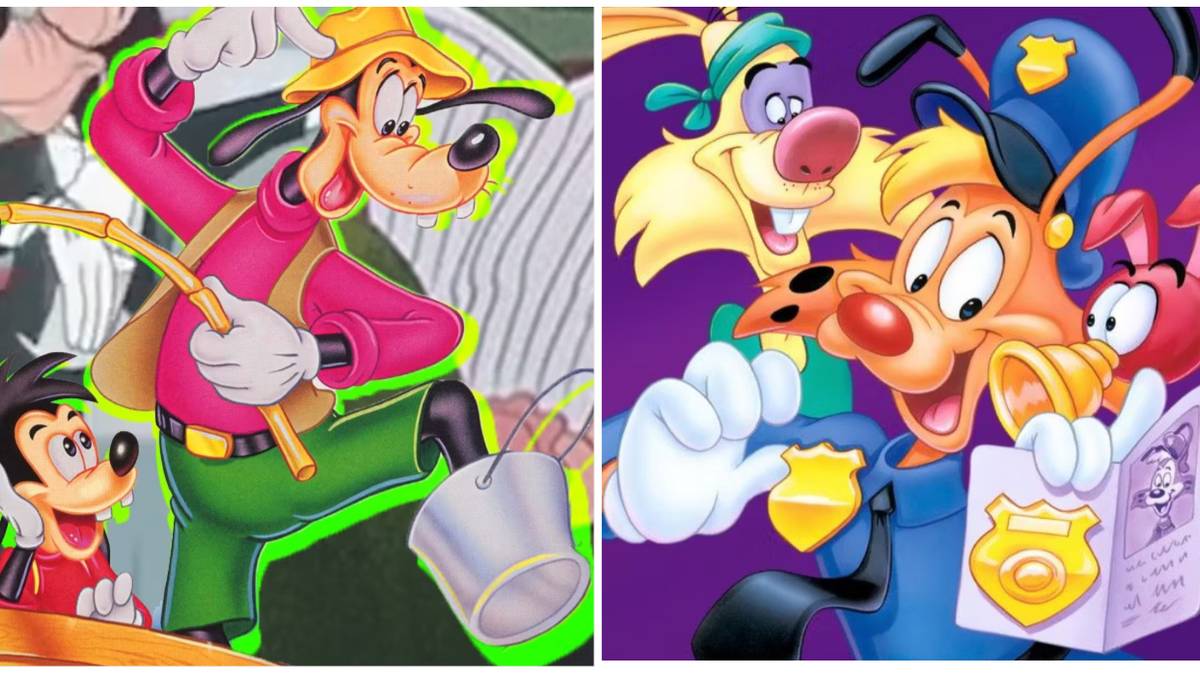
Bonkers: Slapstick, Toons, and a Hint of Roger Rabbit Mayhem
Another gem that fully leaned into the chaotic potential of animation was
Bonkers. Loosely inspired by the groundbreaking live-action/animated film
Who Framed Roger Rabbit, the show featured Bonkers D. Bobcat, an eccentric toon who becomes a police detective after his career as a cartoon star takes a dive.
The series embraced the zany, fourth-wall-breaking humor reminiscent of *Roger Rabbit*, with Bonkers often engaging in madcap antics and slapstick comedy alongside his human partners. It was quirky, frenetic, and certainly not for everyone, even drawing playful jabs from competing cartoons like Warner Bros.'
Animaniacs. Despite its two-season run (1993-1994),
Bonkers stands as a testament to Disney's exploration of meta-humor and the wild possibilities of toon-human interaction, pushing the boundaries of what a mainstream cartoon could be. It was a cartoon that knew it was a cartoon, and reveled in the absurdity.
Goof Troop: Goofy as a Single Dad and the Evolution of Disney Families
While perhaps less "wild" in its premise than space-ducks,
Goof Troop (1992-1993) was surprisingly progressive and certainly an "oddball" choice for the usually uncomplicated Goofy. The show reimagined Goofy as a single father raising his mischievous son, Max, in Spoonerville, alongside their neighbors, Pete and his family.
This portrayal of Goofy as a devoted, if clumsy, single parent was quite a modern take for Disney at the time. It shifted Goofy from a purely comedic character to one with genuine family responsibilities, making him relatable to a whole new generation. The series explored themes of friendship, father-son bonds, and the everyday challenges of suburban life, all while retaining Goofy's signature slapstick charm. *Goof Troop* proved to be immensely successful, leading directly to the beloved animated feature film, *A Goofy Movie* (1995), which further deepened the emotional connection to Goofy and Max's relationship. It's curious to consider why Goofy, out of all the classic Disney characters, was chosen for this role, especially given that iconic pairs like Mickey and Minnie had no offspring of their own. It showcased a willingness to evolve even its most storied characters.
Beyond Cartoons: Live-Action Adventures That Pushed Boundaries
Disney's adventurous spirit in the 90s wasn't confined to animation; live-action Disney Channel shows also offered concepts that veered into unexpected territory.
So Weird: Disney's Darker, Mystical Side for Kids
One of the most striking examples of Disney pushing the envelope was the Disney Channel series
So Weird (1999-2001). Often described as "
The X-Files for kids," the show followed Fiona "Fi" Phillips, a teenager who investigates paranormal activity in the wake of her father's death, believing he may be trying to communicate with her from the other side.
So Weird tackled genuinely dark, mysterious, and often unsettling themes, including ghosts, aliens, folklore, and unexplained phenomena. Episodes featuring attempts to communicate with someone in a coma or terrifying depictions of will o' the wisps, drawing from old Irish and Scottish folklore, left a lasting impression on young viewers. It was edgy, atmospheric, and distinctly different from typical Disney Channel fare. While fond memories of its dark allure persist, be warned: rewatching
So Weird as an adult can be a jarring experience. The production values and acting may not hold up to modern scrutiny, but its impact as a groundbreaking, almost chilling,
90s Disney show is undeniable. It's a prime example of how Disney truly took chances during this decade. If you're pondering whether other childhood favorites stand the test of time, you might enjoy
s Disney Nostalgia: Do Your Childhood Favorites Still Hold Up?.
Another quirky live-action concept was
The Jersey (1999-2004), which featured a magical sports jersey that transported its wearers into the bodies of professional athletes. While lighter in tone than *So Weird*, it was another unique idea that capitalized on youthful fantasies.
The Legacy of Disney's 90s Wildness
The 90s were a period of incredible creative fermentation for Disney's television division. The willingness to greenlight
90s Disney shows with wildly imaginative and sometimes even bizarre concepts not only entertained a generation but also proved that Disney could be more than just princesses and talking animals. These shows forged new paths, explored complex character dynamics, and embraced diverse genres, from sci-fi action to paranormal mystery.
Their enduring appeal lies in their originality and the distinct memories they evoke. Many of these "oddball" ideas helped shape the future of children's television, proving that audiences were ready for more sophisticated and unconventional storytelling. Today, these beloved series are often rediscovered by nostalgic adults on streaming platforms, serving as a vibrant reminder of Disney's adventurous spirit during a truly groundbreaking decade.
In conclusion, the 90s stand out as a remarkable period where Disney fearlessly explored the outer limits of its creative potential on the small screen. From anthropomorphic alien hockey players to single-parent Goofys and chilling paranormal investigations, these "wildest ideas" didn't just entertain; they defined a generation's understanding of what a Disney show could be.